After the Labels Come Down: Where Paintings Go When the Spotlight Moves On
The closing night of a group exhibition in Chelsea, or Marfa, or a converted grain elevator in Kansas City, tends to feel like a finale. The checklist is complete, the press has run, the artist has thanked the crowd. But for the paintings themselves, deinstallation is less an ending than a change of custody. What follows—weeks of logistics, months of storage, sometimes years of quiet—shapes both a work's market standing and, less obviously, its meaning.
The First Week: Coming Off the Wall
Deinstallation is its own craft. Registrars and art handlers document condition before a single screw is touched, photographing surfaces under raking light to establish a baseline. Paintings are wrapped in glassine, then bubble-capped or blanketed depending on fragility, and fitted into crates that may cost more to build than the average viewer would guess. A mid-size contemporary canvas traveling from a museum in the Northeast to a private foundation in Texas can easily generate $8,000 to $15,000 in handling, crating, and climate-controlled freight.
For artists, this is a period of low-grade anxiety. A painting that survived two years of studio scrutiny can be dinged in forty minutes by a rushed handler. The condition report that leaves the gallery is the document that follows the work for its entire life.
The Warehouse Years
Most paintings do not go home after a show. They go into storage—fine art facilities in Long Island City, suburban New Jersey, Los Angeles, or Chicago, where racks are wheeled like hospital gurneys and humidity holds steady within a few degrees. Storage fees for a single large canvas can run several thousand dollars a year, a cost that quietly compounds in consignment agreements.
This is where the consignment cycle begins in earnest. A painting left with a gallery after an exhibition remains, on paper, the artist's property until sold. Secondary placements—another gallery in a different city, a hotel lobby, a corporate collection loan—keep the work visible without the expense of a full show. Dealers call this 'keeping the painting warm.' A canvas that sits too long in the dark risks becoming, in market shorthand, 'stale,' which is less about the object than about the narrative around it.
Private Placements and the Shift in Meaning
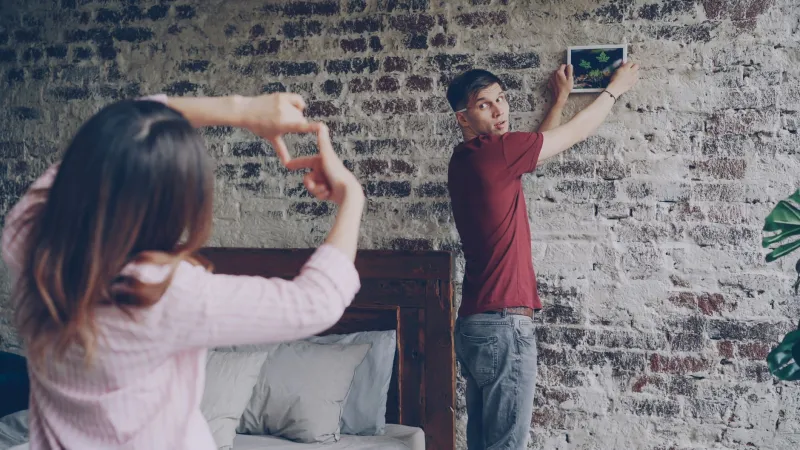
When a painting does sell after the show, it often enters a residence rather than another institution. Collectors in Dallas, Palm Beach, or the Bay Area may live with the work for years before it surfaces again. And something subtle happens in that transfer: the painting loses its explanatory apparatus. The wall text, the curator's essay, the didactic panel—all of it disappears. What remains is the object and its owner's private reading of it.
Critics have long noted that this shift can be liberating or corrosive. Freed from institutional framing, a challenging abstract work might become, for its new owner, a daily companion rather an argument. Conversely, a painting acquired for its exhibition buzz may find itself valued chiefly for the credential line in its provenance: 'Exhibited at...' The exhibition history becomes a kind of currency, appended to every future sale.
Provenance as Compounding Interest
This is the quiet economics of the afterlife. Each showing adds a line to the work's biography, and biography drives price. A canvas that appeared in a well-reviewed museum survey commands a premium over an identical canvas that never left the studio—sometimes 30 percent or more in the secondary market. Auction specialists routinely cite exhibition history alongside artist name and date when setting estimates.
Artists and their dealers understand this, which is why strategic lending matters. A painting loaned to a university museum for a year, or included in a traveling survey that stops in three states, accrues value even without a sale. The work is, in effect, working.
The Long Return
Occasionally, a painting circles back. A collector's estate is settled; a work is reconsigned; a curator remember a canvas from years earlier and requests it for a retrospective. When that happens, the painting re-enters the light with a thicker file—condition reports, shipping manifests, insurance schedules, a chain of custody that reads like a passport.
For the viewer who saw the work once, under gallery lights, surrounded by its peers, it can be disorienting to encounter it again in a living room or a different museum a decade on. The painting has not changed. Everything around it has. That, in the end, is the real lesson of the afterlife: a painting's meaning is never fixed at the moment of exhibition. It is renegotiated with every wall it hangs on, and every wall it waits behind.