The Fifty-Mile Radius: What Your Local Painter Knows That Chelsea Doesn't
There is a peculiar ritual in American collecting that deserves scrutiny. A buyer in Columbus will fly to New York, wait in a Chelsea back room, and pay a premium for a canvas by an artist whose regional peer—working twelve miles from the buyer's own garage—sells for a quarter of the price. The difference between the two paintings is rarely quality. It is almost always narrative, and narrative is the most expensive ingredient in the art market.
The Geography of Validation
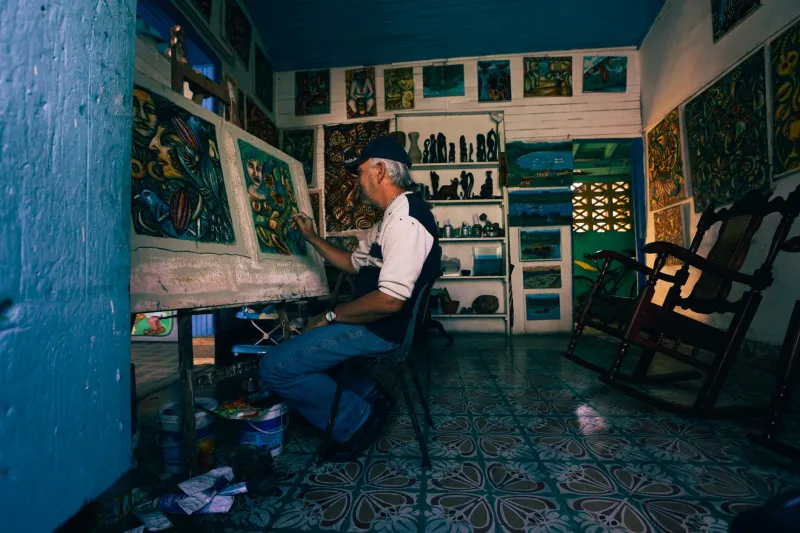
The American art market operates on a simple assumption: significance is manufactured in New York and Los Angeles, then distributed outward. A painter becomes important when a coastal gallery says so. This assumption made sense in 1985, when physical distance genuinely limited an artist's reach. It makes very little sense in 2025, when a collector in Tulsa can follow a painter's studio practice on a screen, visit the workspace in person, and watch a body of work develop over years.
What has not caught up is pricing. Regional painters remain undervalued not because the work is weaker but because the validation infrastructure—fairs, gossip, institutional attention—remains concentrated on two coasts. That gap between quality and price is precisely where a first-time buyer should be looking.
Three Studios Worth the Drive
Consider the painters working within an afternoon's drive of mid-sized American cities. Around Columbus, a cluster of Ohio painters has spent the past decade building rigorous abstract practices with almost no coastal representation—artists whose canvases hold their own against anything in a Chelsea back room, at prices that reflect supply and demand rather than mythology.
In Tulsa, the Oklahoma painting scene has quietly matured, anchored by regional institutions and a collector base that actually lives with the work. And Richmond, Virginia—already on the map thanks to its museum and MFA program—continues to produce figurative painters who will be written about nationally in five years and are accessible locally now.
The common thread is not style. It is that each of these scenes rewards the collector who shows up. Studio visits happen. Relationships form. Prices reflect the relationship, not the intermediary's overhead.
What Proximity Actually Buys
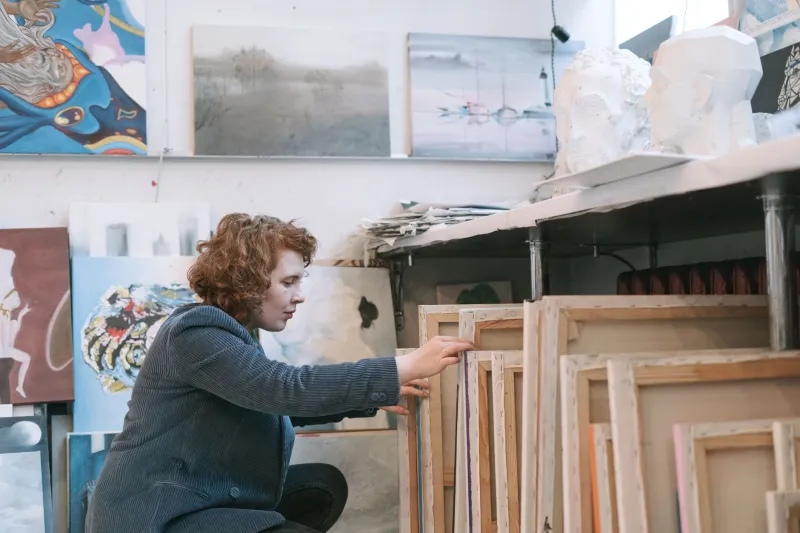
The practical advantages of buying within fifty miles are concrete. First, the studio visit. No coastal gallery offers this to a first-time buyer; the local painter will show you the work in progress, explain the decisions, and let you understand a painting before you own it. Second, price transparency. Regional artists sell directly or through modest local galleries, and the markup structure is legible rather than opaque. Third, provenance from day one. A painting you bought from the artist's studio has a cleaner history than one traded three times before reaching you.
There is also a subtler benefit: the painting comes with a person attached. Collectors who buy locally report something coastal buyers rarely experience—watching the artist's career develop, acquiring a second piece years later, having a body of work that traces a shared history rather than a market cycle.
The Prestige Problem, Honestly Stated
None of this means prestige is worthless. Resale value, institutional attention, and critical discourse do matter, and a regional purchase carries real risk that a blue-chip purchase does not. But first-time buyers should be honest about what they are actually paying for. A large share of a Chelsea price is the gallery's rent, the fair circuit, and the cost of manufacturing scarcity. The painting itself may account for a fraction of the invoice.
The counterargument—that regional work lacks a secondary market—is real but often overstated. Most first-time collectors are not flipping paintings. They are living with them. And for that purpose, the painting on the wall matters more than the hypothetical auction result.
A Modest Proposal
Before booking the next flight to New York, spend a Saturday within fifty miles of home. Visit the open studios. Walk the local gallery's current show. Ask one regional painter what they are working on. The worst outcome is an afternoon spent looking at paintings. The best outcome is the beginning of a collecting practice built on knowledge rather than borrowed consensus—which is, in the end, the only kind worth having.