Living With It: A Collector's Field Manual for Hanging Paintings in Imperfect American Homes
The Part Nobody Photographs
Collection announcements tend to feature the moment of acquisition: the red dot, the champagne, the painting leaning against a gallery wall waiting to travel. What rarely gets documented is the following week, when the new owner stands in a suburban living room in Ohio with a stud finder, a level, and a painting that cost more than the car in the driveway.
Living with contemporary painting is a discipline unto itself, and it is one the art market rarely teaches. To fill the gap, we spoke with conservators and independent art handlers who make their livings fixing what well-meaning collectors get wrong.
Light: The Slow Thief
Every conservator interviewed for this piece returned, unprompted, to the same subject: daylight. Direct sun is the fastest way to fade pigments, yellow varnishes, and crack canvases, and the damage is cumulative and irreversible.
The practical guidance is simple. Never hang a painting on a wall that receives direct sun for part of the day, regardless of how flattering the light looks at two in the afternoon. If a beloved spot faces a bright window, consider UV-filtering film on the glass, which most residential window companies can install for a few hundred dollars.
Artificial light demands similar restraint. LED picture lights are now affordable and run cool, but keep any fixture at least a foot from the canvas surface. Halogen, still common in older homes, runs hot enough to cook a painting slowly over years. If the budget allows, a conservator consulted for this article recommended a simple investment: an inexpensive hygrometer and a light meter, together under fifty dollars, to know what your walls are actually doing.
Heat, Steam, and the Radiator Problem
The single most common mistake, according to the handlers we interviewed, is hanging work above heat sources. Radiators, baseboard heaters, and fireplaces create fluctuating microclimates that stress canvas and wood. A painting hung above a working radiator in a Minneapolis winter may cycle through humidity swings daily, and the canvas will eventually respond, usually with cupping or a visible planar distortion.
Bathrooms and kitchens deserve equal suspicion. Steam, grease, and temperature swings make them poor homes for anything on canvas. Works on panel or works under glass tolerate these rooms somewhat better, but the honest advice from every professional was to treat bathrooms as painting-free zones.
Walls: Plaster, Brick, and the Rental Question
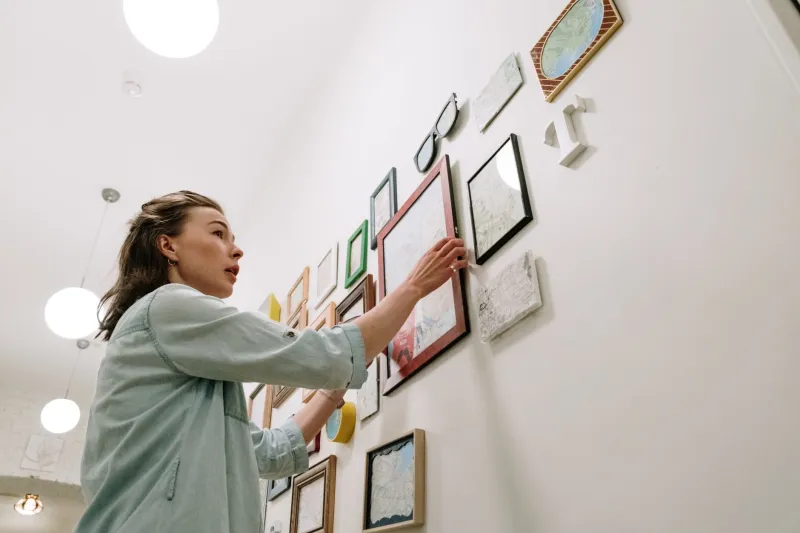
American housing stock presents its own challenges. Pre-war apartments in Chicago, New York, and Boston often have plaster walls that crumble around ordinary nails. The solution is not avoidance but technique: use a proper plaster anchor, drill a pilot hole, and anchor into the lath or a stud when possible. For heavier works, two hooks sharing the load distribute stress and reduce the chance of a middle-of-the-night collapse.
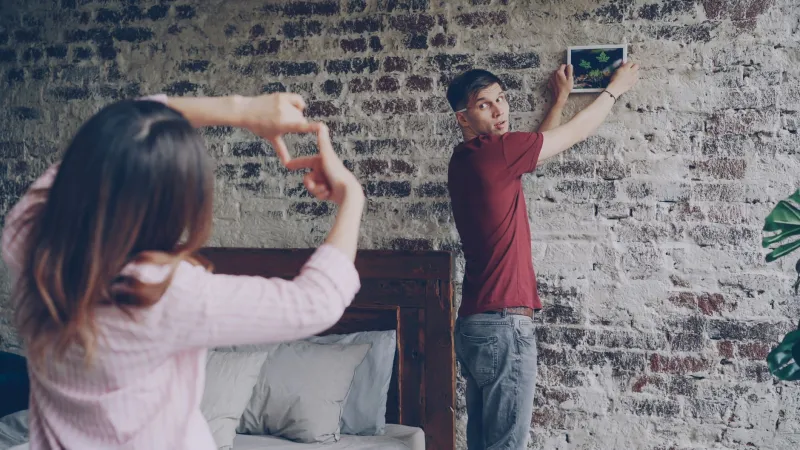
Brick, common in lofts and converted industrial buildings, calls for masonry anchors and a hammer drill. Renters, meanwhile, have more options than they think: heavy-duty adhesive hooks rated for the actual weight of the work, standing rails, or leaning arrangements on consoles and floor easels. A leaning painting on a sturdy sideboard is a legitimate display tradition, not a compromise.
One further caution from the handlers: check the hanging hardware on the back of any work you buy. A single flimsy D-ring screwed into a panel is an accident waiting to happen. Upgrading to proper D-rings and braided wire costs little and buys real peace of mind.
When to Call a Professional
There is a moment in every serious collection when the do-it-yourself approach stops making sense. The thresholds are fairly clear. Anything over fifty pounds, anything valuable enough to insure specifically, anything oversized or oddly weighted, and anything going above a staircase deserves a professional art installer. Most metropolitan areas have independent art handlers who will hang a single work for a few hundred dollars, and many galleries will arrange installation as part of the sale if asked.
Conservation is a separate question. If a painting shows craquelure, flaking paint, a dent in the canvas, or signs of past water damage, do not attempt repair and do not hang it in an unstable environment. The American Institute for Conservation maintains a directory of qualified conservators, and an assessment typically costs less than most collectors fear.
Insurance and the Paper Trail
A final piece of housekeeping that separates serious collectors from casual ones: documentation. Photograph every installed work, keep invoices and certificates of authenticity together, and confirm that your homeowner's policy actually covers fine art. Many standard policies cap coverage for paintings at a level that would surprise their owners; a scheduled personal articles rider is usually inexpensive and closes the gap.
The Point of It All
None of this is meant to make collectors anxious. The professionals interviewed for this piece were unanimous on one point: paintings are meant to be lived with, not entombed. A work that hangs in a hallway nobody walks through, in light nobody turns on, has failed at its job.
The goal is a middle path, a home where paintings are seen daily and protected sensibly. Get the light right, respect the radiator, anchor the wall properly, and know when to make the call to a professional. After that, the only remaining task is the pleasant one: looking.