Skip the Blue-Chip Line: A Case for Buying Art in America's Smaller Markets
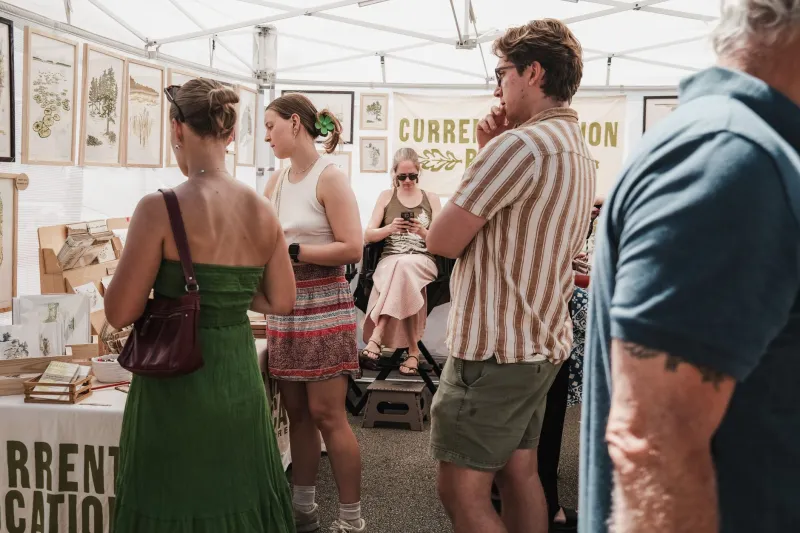
There is a familiar ritual playing out at every major fair from Miami Beach to the Armory Show: collectors circling identical blue-chip booths, paying premiums for certainty, and walking away with work that has already been priced for its peak. Meanwhile, in Portland, Asheville, Santa Fe, and dozens of secondary cities, galleries are showing painters of genuine promise at prices that would not cover the framing budget at a Manhattan blue-chip dealer.
The argument of this column is simple: for most collectors, the regional circuit is not a consolation prize. It is the smarter trade.
The Math of the Periphery
Start with arithmetic. A mid-career painter showing at a respected regional fair in Kansas City or Richmond might be priced between $3,000 and $15,000. Comparable work by an artist of similar trajectory, filtered through a primary New York gallery, can carry two to four times that figure before the gallery's overhead is even accounted for. The difference is not quality. It is rent, staff, and the cost of visibility in a saturated market.
Early buying also captures the steepest part of an artist's value curve. The collectors who purchased work by now-canonical American painters at regional venues in the 1990s did not merely save money—they participated in careers from the ground floor, often with direct access to the artists themselves.
How to Spot the Real Thing
Value hunting requires diligence. At a regional fair, we recommend the following discipline:
- Follow the resume, not the booth. An artist with a residency track record, university teaching position, or inclusion in a museum group show has been vetted by professionals without yet carrying blue-chip pricing.
- Look for a coherent practice. A single striking canvas means little. A body of work that shows sustained development over several years signals seriousness.
- Ask who collects them. Galleries in smaller markets are refreshingly candid. If a hospital, university, or regional museum has acquired the work, that institutional confidence matters.
- Meet the artist when possible. Commitment is legible in conversation. Painters who can articulate their practice—and who have stayed with it through lean years—tend to be the ones still exhibiting a decade later.
Red Flags Worth Heeding
The regional market has its own distortions. Be wary of pricing that seems to imitate New York without the artist's history to support it—sudden jumps to $30,000 for an unexhibited painter usually reflect a gallery's ambitions rather than market consensus. Beware of booths that rotate their roster entirely year to year; consistency of representation is a quiet but meaningful signal. And treat 'limited edition' framing of unique works with skepticism. Painting is not a print run.
Shopping Closer to Home
There is also a civic case. Regional galleries sustain the ecosystems where artists actually live and work—affordable studios, local patrons, teaching positions. Money spent in Albuquerque or Louisville circulates in communities that need it, and collectors frequently report a richer experience: relationships rather than transactions, dinners rather than VIP lounges.
None of this argues for abandoning the major fairs entirely, where survey value and market intelligence remain unmatched. But as a first strategy, and for most budgets, the regional circuit offers what the blue-chip world increasingly cannot: access, fair pricing, and the genuine thrill of discovering a painter before the consensus does.
The white walls of the big city will still be there. The artist you should have bought in Tulsa may not be.