Pixels Before Paint: Inside the Quiet AI Experiments Reshaping the American Studio
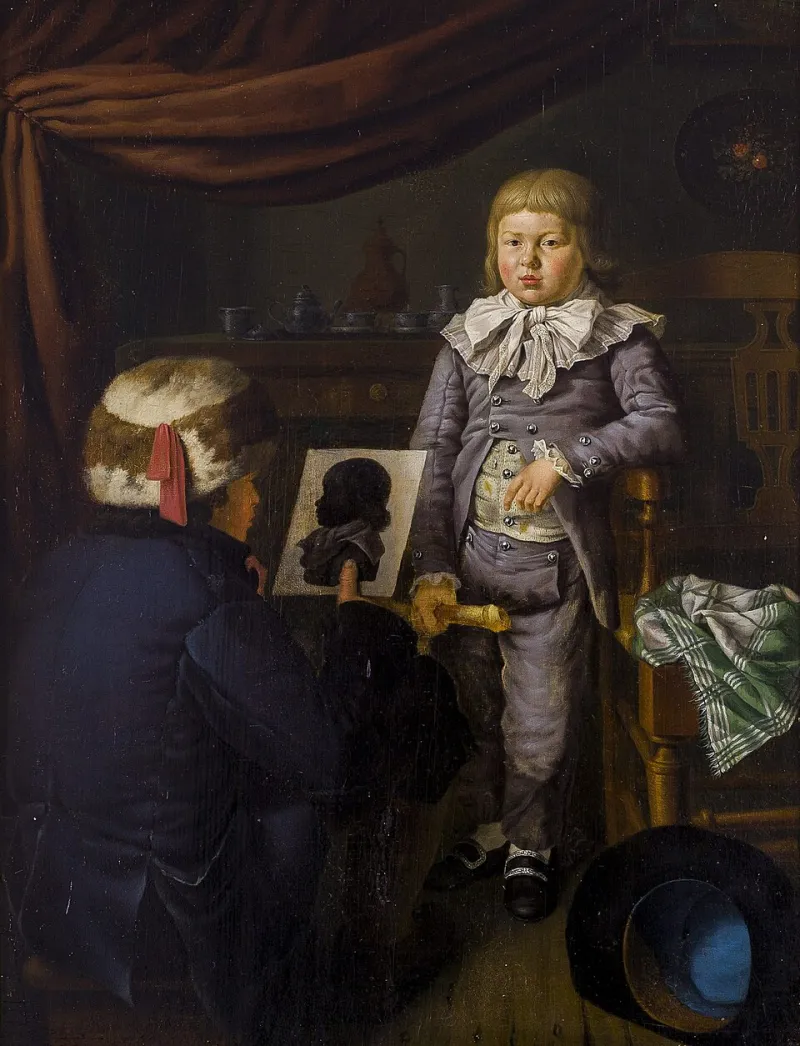
Photo: Jacob Schwartzenbach, Public domain, via Wikimedia Commons
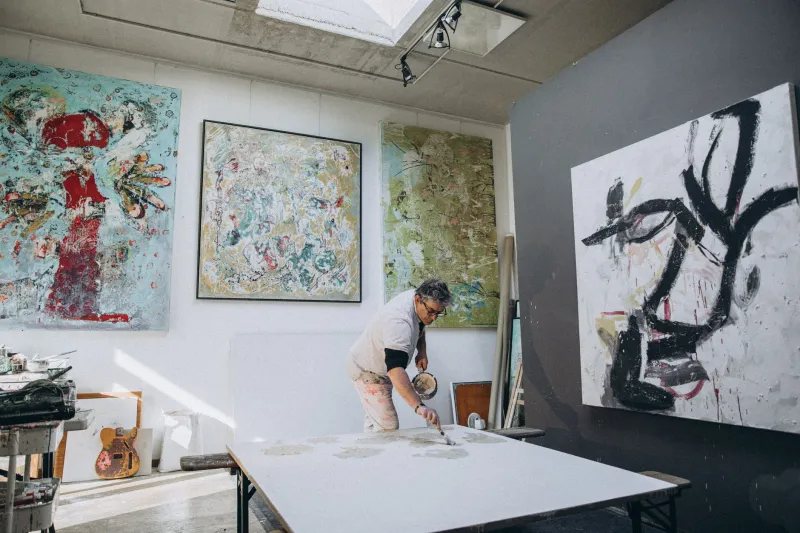
In a converted warehouse studio in Albuquerque, a painter named Ruth Calloway begins her mornings the way she has for three decades: with coffee, silence, and a pencil. Two miles away, a younger colleague starts his the same way — except his first mark of the day is a text prompt. Within minutes, he has a dozen color studies for a commission that won't be painted for weeks.
Both call themselves painters. Only one of them is comfortable saying so out loud anymore.
The Sketchbook Goes Digital
The conversation around artificial intelligence in the visual arts has been dominated by spectacle — auction controversies, litigation over training data, and fully synthetic images masquerading as painting. What has received far less attention is the quieter migration happening in studios across the country, where generative tools are being absorbed not as replacements for the brush but as pre-painting instruments: digital color wheels, composition mockups, and client-facing previews that once would have consumed days of thumbnailing.
For painters who work on commission — a population far larger than the market narrative suggests — the appeal is practical. Revising a palette in Photoshop takes seconds. Repainting a six-foot canvas because a client decided mid-process that she wanted cooler tones takes weeks.
"I stopped treating it like a philosophical crisis and started treating it like a color-aid swatch book," one Midwestern landscape painter told us, requesting anonymity because, in her words, "the internet has opinions." "Nobody accused Richard Diebenkorn of cheating because he planned. Planning is half the tradition."
Where the Line Gets Drawn
The purists, it should be said, are not a fringe. A vocal cohort of American painters — several of them prominent in academic and figurative circles — have signed informal pledges to keep generative imagery out of their process entirely, citing both ethical concerns about training data and a more personal objection: that struggle is the substance of the work.
"The mistakes are where my paintings come from," one Boston-based abstractionist told Sariev Art. "A tool that eliminates the wrong turns eliminates the painting. What's left is illustration of an intention, not the intention itself."
There is also a commercial dimension that few artists discuss openly. Collectors, particularly younger ones entering the market, increasingly ask whether AI was involved in a work's production. Some painters see disclosure as a matter of honesty; others fear that any admission, however limited, will taint the work's provenance in a market that has barely begun to define its terms.
The distinction most artists land on is one of degree. Generating a reference image to solve a lighting problem reads, to most, as analogous to working from photographs — a practice accepted since the nineteenth century. Generating the composition itself, or worse, transferring it directly to canvas, crosses into territory many describe as a category error: the painting becomes a copy of an image rather than a record of decisions.
Tool, Crutch, or Something Else Entirely
Historically, painters have never been purists for long. The camera obscura, the projector, the paint tube, the acetone transfer — each was greeted with alarm, then absorbed, then forgotten as controversy. The question is whether generative tools will follow that arc or constitute a genuine rupture, and the honest answer is that nobody in the studio knows yet.
What is observable is a generational and economic split. Painters with steady commission pipelines tend to adopt quietly and disclose selectively. Painters whose reputations rest on gesture, materiality, and the visible evidence of the hand tend to abstain loudly. And a middle generation — often mid-career, often outside coastal markets — is experimenting in private, treating the software the way earlier generations treated a stack of art books: as raw material to argue with, not obey.
Calloway, the Albuquerque painter, offers perhaps the most pragmatic position. She tried a generative tool for a month, produced a series of color studies she describes as "competent and dead," and returned to her pencils.
"It told me what I already would have decided, faster," she said. "That's not a collaborator. That's a very expensive mirror."
Her neighbor with the prompts would likely disagree — but he declined to be interviewed for this piece. In 2025's studio culture, that may be the most telling detail of all: the painters using these tools are still deciding, day by day, whether they can afford to say so.
For collectors, the practical guidance is simple. Ask. Not as an accusation, but as a question of process — the same way one might ask whether a canvas was painted from life or from photography. The answers, increasingly, reveal as much about the artist as the work itself.