Beyond the Coasts: Five Heartland Painters Redefining the American Landscape
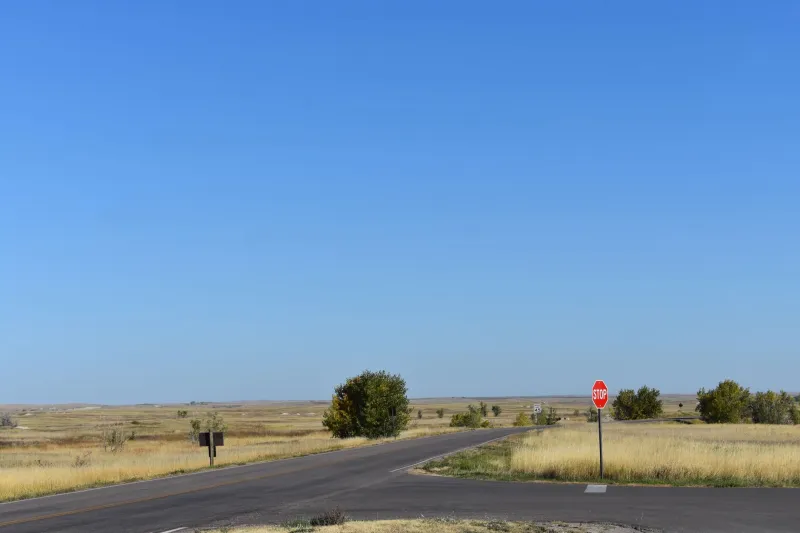
For much of the past two decades, the critical apparatus of American painting has operated within a narrow corridor running from New York to Los Angeles, with a brief detour through Marfa. That geography is shifting. Across the country's interior — in Santa Fe warehouses, Detroit storefronts, and Kansas college towns — painters are producing work that engages the American landscape tradition not as nostalgia but as a live argument about place, labor, and belonging.
The phenomenon is partly economic. Rising costs in coastal art centers have pushed artists toward cities where a studio costs less than a parking space in Chelsea. But the revival is more than a matter of rent. These painters are reclaiming subject matter that the art world long dismissed as provincial: grain elevators, desert scrub, vacant factories, the flat horizon of the plains. In doing so, they have discovered that the regional, honestly examined, is anything but small.
The Lineage and Its Burden
Any discussion of contemporary regionalist painting must contend with the ghosts of Grant Wood and Thomas Hart Benton, artists whose celebration of Middle America curdled into caricature for later generations. Today's painters inherit that burden knowingly. Their landscapes are rarely celebratory; they are documents of a complicated inheritance, marked by drought, deindustrialization, and demographic change.
What distinguishes this wave from the 1930s original is its refusal of a single national mythology. There is no unified American scene here — only distinct, locally rooted visions that happen to share a conviction that geography still matters.
Five Painters to Watch
Marisol Vega — Las Cruces, New Mexico. Vega's large-scale depictions of the Chihuahuan Desert trade in a heat-warped palette of bleached pinks and oxidized coppers. Her treatment of borderland terrain is neither picturesque nor polemical; it is forensic, attentive to water rights, migration routes, and the slow violence of aridification. Her 2024 solo exhibition at a Santa Fe gallery sold out before opening night.
Denny Kowalczyk — Detroit, Michigan. Working in the tradition of the urban industrial landscape, Kowalczyk paints the ruins and rebirths of the Rust Belt with an oil handling that recalls both Anselm Kiefer and the Precisionists. His series on the decommissioned Great Lakes freighters has drawn attention from institutional curators in Chicago and Cleveland.
Ruth Ann Castellan — Wichita, Kansas. Castellan's paintings of the Flint Hills are deceptively modest: tallgrass rendered in short, vibrating strokes, skies that occupy two-thirds of the canvas. Critics have compared her to Fairfield Porter, but her intimacy with the land she paints — she has worked the same few square miles for fifteen years — gives the work an observational depth that style alone cannot explain.
Terrence Odom — Pittsburgh, Pennsylvania. Odom's nocturnal cityscapes of the Monongahela River valley, with their sodium-orange glow and hovering steel bridges, treat the industrial landscape as memory rather than monument. His work has appeared in several museum acquisitions over the past two years, a notable trajectory for an artist who still lives ten blocks from the mills he paints.
June Halvorsen — Fargo, North Dakota. Halvorsen's spare, almost abstract compositions of snowfield and shelterbelt have made her a favorite of collectors seeking the next generation of landscape painters. Her refusal to insert human figures — the farms appear abandoned, or merely asleep — gives her canvases a quiet unease that lingers.
Why the Moment Is Now
Several forces have converged. Museum surveys of regionalist and WPA-era painting have reintroduced the tradition to younger audiences. Online platforms have dissolved the gatekeeping that once required interior artists to relocate. And a broader cultural appetite for authenticity — for work that comes from somewhere specific — has made the heartland painter newly legible to coastal buyers.
The market has noticed, though unevenly. Auction results for these artists remain modest compared with their coastal contemporaries, which for collectors represents an opportunity as much as a signal of neglect. The more significant development is critical: the American landscape, long treated as a exhausted subject, is once again a site of genuine artistic contention.
Whether this moment matures into a durable movement or dissolves into trend remains to be seen. But the painters profiled here suggest that the most interesting painting in America is currently happening a long way from the coasts — and that the center of the map may be the best vantage point from which to see the country clearly.