Behind the Walls: Inside America's Museum Vaults, Where Nine of Every Ten Paintings Wait in the Dark
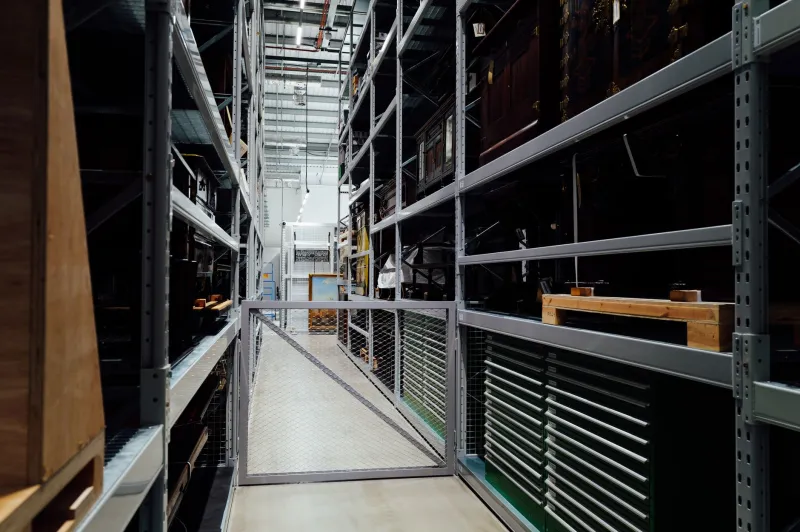
Somewhere beneath a museum you have probably visited — perhaps the Art Institute of Chicago, perhaps the MFA Boston — hangs a painting you will never see. Not because it was deaccessioned, damaged, or deemed unworthy, but because there is simply no room. Across the United States, curators estimate that between 90 and 95 percent of a typical museum's painting collection sits in storage at any given moment. The math is brutal and unchanging: even the most generous permanent collection galleries can display only a sliver of what institutions own.
For the art world, this has long been an open secret. For everyone else, it is a quiet scandal waiting to be told.
The Arithmetic of the Vault
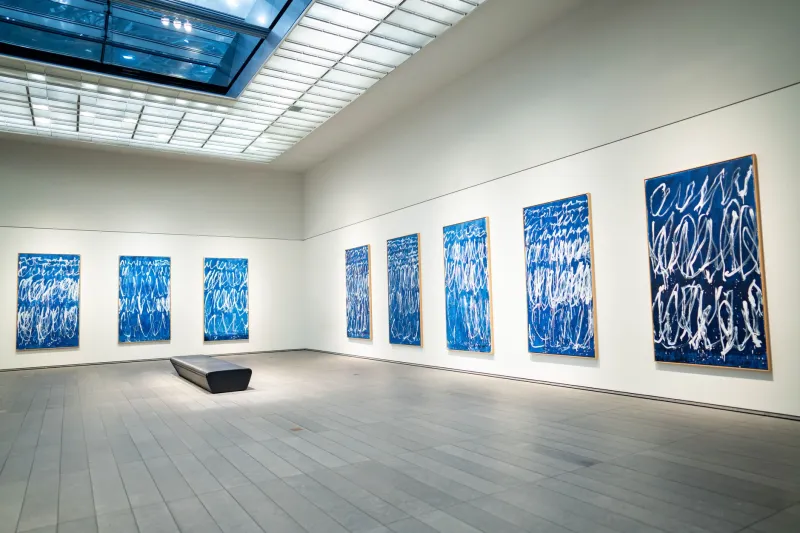
The numbers vary by institution, but the pattern holds with remarkable consistency. A mid-sized American art museum might hold 5,000 paintings and hang 300. The Metropolitan Museum of Art, with roughly 1.5 million objects across all departments, displays a fraction of a fraction. Even devoted repeat visitors walk past the same anchors — the Homer seascape, the Hopper gas station — while thousands of canvases rest on rolling racks in climate-controlled darkness below.
None of this is negligence. Storage, done properly, is preservation: stable temperature, controlled humidity, protection from light that would otherwise bleach pigments irreversibly. A painting in a vault is, in a real sense, safer than one on a wall. But safety was never the mission statement. Museums were founded on the promise of encounter — and encounter requires visibility.
Why the Walls Came Down
Several forces conspired to shrink what visitors actually see. Permanent collection galleries are expensive to maintain and generate no ticket revenue the way blockbusters do. Curatorial attention has shifted toward temporary exhibitions, which travel, attract press, and justify loans. Donor expectations play their part, too: a named gallery devoted to a gift of paintings tends to stay that way for decades, crowding out the possibility of rotation.
The result is a museum experience that has quietly calcified. The visitor who returns every year sees largely the same show. The museum, in effect, becomes a monument to its own greatest hits.
The Conservators Fighting the Dark
Not everyone inside the institution accepts this. Conservators — the professionals charged with the physical welfare of the objects — have become unlikely advocates for visibility. Their argument is practical as much as philosophical: works that sit untouched for decades develop problems nobody notices. Stretcher bars warp. Varnishes yellow unevenly. Paintings pulled from storage for examination frequently reveal condition issues that only regular handling would have caught.
A growing cohort of curators has made rotation a stated priority, arguing that a museum's obligation is to the full collection, not merely its famous ten percent. Their challenge is logistical. Every swap requires condition checks, conservation review, insurance adjustments, label writing, and often a fresh coat of paint on the wall itself. Rotating a single gallery can consume a small curatorial budget for a year.
The Visible Museum Arrives
Change, however, is coming from an unexpected direction: the public. The open-storage model — pioneered by institutions like the Victoria & Albert Museum in London and embraced stateside by the Luce Foundation Center at the Smithsonian American Art Museum — puts thousands of stored works on display in dense, floor-to-ceiling arrangements. No interpretive labels, no breathing room. Just art, in abundance, with the scaffolding of the museum exposed.
American audiences have responded with enthusiasm. The Brooklyn Museum, the Walters Art Museum in Baltimore, and the new storage-visibility initiatives at the Buffalo AKG Art Museum all treat the vault as an attraction rather than an embarrassment. Visitors, it turns out, do not mind the lack of breathing room. They mind the absence of the art.
Digital initiatives extend the trend. Online collection databases, once an afterthought, now allow anyone with a laptop to browse paintings that may not have been exhibited in half a century. The museum's basement has, in effect, been moved onto the internet.
What This Means for Painters and Collectors
For living painters, the visible-museum movement carries a pointed lesson. Museums acquire far more than they can ever show, which means acquisition is not the same as canonization — and visibility is not guaranteed by institutional validation. Painters negotiating with museums would do well to ask not only whether a work will enter the collection, but whether it will ever leave the rack.
For collectors, the open-storage trend reframes the private experience entirely. A painting hung in a home is, statistically, seen more often than most museum-owned works. The domestic wall — long dismissed as the least serious venue for art — is quietly becoming the most active site of looking in American visual culture.
There is a larger argument here, too. The vault problem is ultimately a question of institutional purpose. A museum that shows five percent of its holdings is not a failure; it is a constraint. But a museum that never interrogates that constraint — that treats the storage rack as a final resting place rather than a staging ground — has confused preservation with curation. The paintings in the dark were made to be seen. The institutions that remember this will be the ones that matter in the decades ahead.
The second look, it turns out, is the one most worth taking.