Off the Vertical: How Painted Ceilings, Floors, and Stairwells Are Redrawing the American Interior
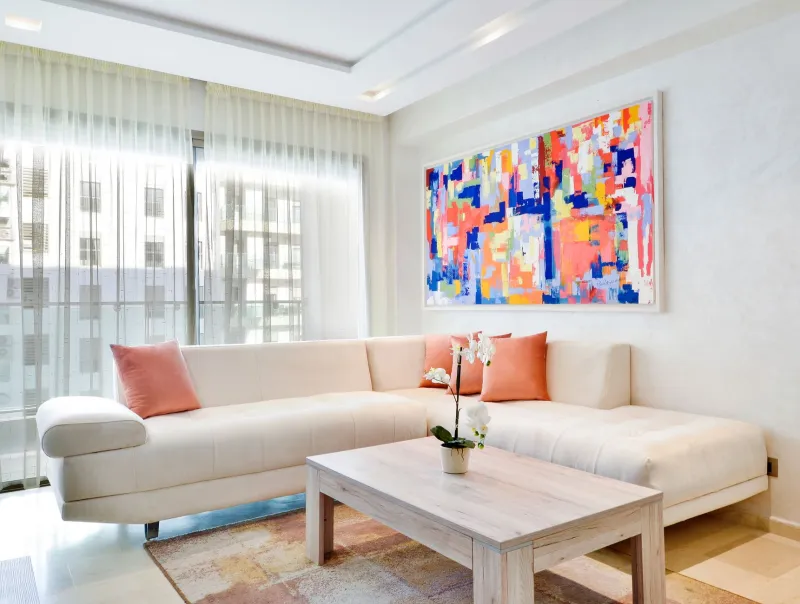
The painting has hung on the wall for so long that the arrangement feels like physics rather than convention. But a quiet migration is underway in American studios, and it is moving downward, upward, and around corners—onto the surfaces that architecture has always reserved for someone else.
The Ceiling Comes Back into Play
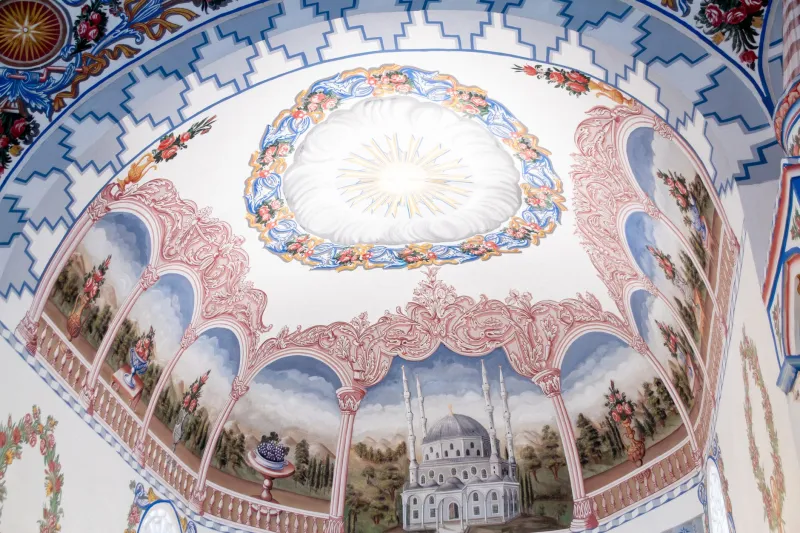
In a branch library outside Des Moines, visitors who look up—a minority, historically—are met with several hundred square feet of commissioned abstraction drifting across the coffered ceiling. The painter, who spent two decades producing conventionally hung canvases, describes the shift bluntly: the wall asks a painting to be looked at; the ceiling asks to be lived under.
The Midwest has become an unlikely center of gravity for these projects. Civic budgets for new construction are tight, but a ceiling mural costs a fraction of a sculpture commission and delivers something no freestanding work can: an entire room rewritten. Libraries, courthouses, and community centers—buildings Americans actually enter—have proven more receptive patrons than the white-cube gallery, which remains stubbornly attached to the vertical plane.
Floors, Warehouses, and the Horizontal Gaze
Texas offers a different case study. In converted warehouse districts of Houston and Marfa's orbit, painters have begun treating poured concrete as substrate, sealing pigmented designs beneath industrial-grade epoxy. The results function somewhere between painting and flooring, and that ambiguity is precisely the point. A floor painting cannot be ignored, resold easily, or hung elsewhere. It is the most site-committed work a collector can buy.
Collectors, it turns out, are not entirely opposed to this. The domestic floor painting remains rare—it is a logistical commitment akin to installing a pool—but commercial clients have embraced it with enthusiasm. A painted floor in a restaurant or boutique performs as branding, atmosphere, and serious patronage simultaneously.
The Stairwell as Sequential Canvas
Perhaps the most interesting development is also the most intimate: the stairwell commission. In New England, a handful of painters have built small practices around private homes, turning staircases into vertical narratives that unfold step by step. The format imposes its own logic—no viewer sees the whole at once, only in passage—and painters describe it as closer to composing a sentence than a picture.
These commissions rarely appear in catalogs or at fairs. They exist in the same category as the mural tradition: uncollectible in the conventional sense, documented only in photographs, owned by no one in the way a canvas is owned. Yet they may represent painting's most authentic current answer to architecture, a dialogue the medium has not had this directly since the Renaissance.
What This Means for the Market
The commercial implications are still settling. Galleries, whose economics depend on transportable, sellable objects, have no clean model for a ceiling. Some painters handle this by pairing architectural commissions with derivative works—studies, preparatory panels—that can circulate. Others have simply accepted that the work's value accrues to reputation rather than inventory.
For collectors, the shift offers a caution and an invitation. The caution: architectural painting cannot be flipped, moved, or insured like a canvas. The invitation: it offers something the market has struggled to supply—painting experienced as environment rather than possession. Whether this remains a current or hardens into a movement will depend on whether American painters keep finding, and patrons keep funding, the surfaces everyone else forgot.